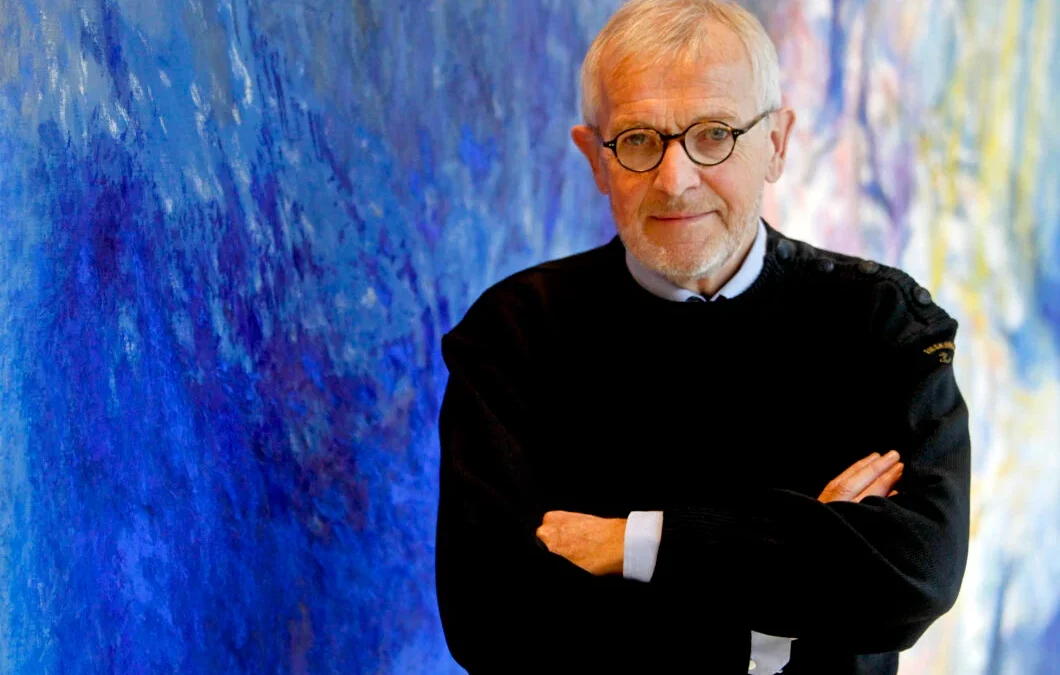
Photo: Bernando Pérez / El País
The ACME consortium is delighted to congratulate Professor Francis Halzen (University of Wisconsin–Madison) on being awarded the 2026 Nobel Prize in Physics. Over the past four decades, his pioneering work has laid the foundations of neutrino astronomy and driven the development of neutrino telescopes in the Antarctic ice.
Under his leadership, the pioneering AMANDA detector was successfully deployed at the South Pole in 1993–1994, paving the way for IceCube, completed in 2010. Instrumenting a volume of one cubic kilometre of Antarctic ice, IceCube opened a new window on the Universe through high-energy neutrino astronomy. In 2013, the experiment reported the first observation of high-energy neutrinos of cosmic origin.
A major milestone followed with the identification of the blazar TXS 0506+056 as a source of high-energy neutrinos, through a multi-messenger approach combining neutrino observations with electromagnetic observations across the spectrum. This landmark result demonstrated the extraordinary potential of multi-messenger astronomy—an approach that lies at the heart of ACME’s activities, bringing together complementary observatories, data and expertise to investigate the most energetic phenomena in the Universe.
Since then, the field has continued to advance rapidly, with evidence for astrophysical neutrino emission from sources such as the active galaxy NGC 1068, located about 35 million light-years away, as well as from our own Milky Way. In parallel, major efforts have been pursued around the globe, particularly in the Mediterranean Sea. The ANTARES neutrino telescope, which operated from 2006 to 2022, pioneered deep-sea neutrino astronomy and demonstrated the feasibility of operating large-scale neutrino telescopes in the deep sea, paving the way for the next-generation KM3NeT observatory, currently under construction.
Scientists from both the IceCube and KM3NeT collaborations are actively participating in the ACME project, sharing the common objective of facilitating access to and exploitation of neutrino data by the broader scientific community and strengthening their connection with other astronomical messengers. By fostering this multi-messenger approach, ACME will play a crucial role in deepening our understanding of the most extreme phenomena in the Universe—and in enabling the many discoveries still to come.