|
This is the June 2026 newsletter of the ACME consortium, an EU-funded project aiming to achieve an ambitious, coordinated European-wide optimization of accessibility and cohesion among multiple leading astroparticle and astronomy research infrastructures. |
| |
Calls for transnational access
The third call for visits to expertise centers (ACME institutes working on multi-messenger topics has concluded, with 52 projects selected out of the 108 applications. The next call will be in Fall 2026.
For the first time, the KM3NeT and Pierre Auger Collaborations are opening a call to access the data of their instruments. Through this program, external scientists may access a subset of internal data for their project. The deadline for application is July 20, 2026. |
| |
Workshops and schools
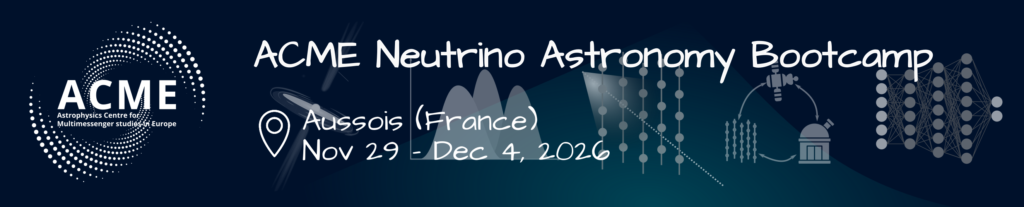
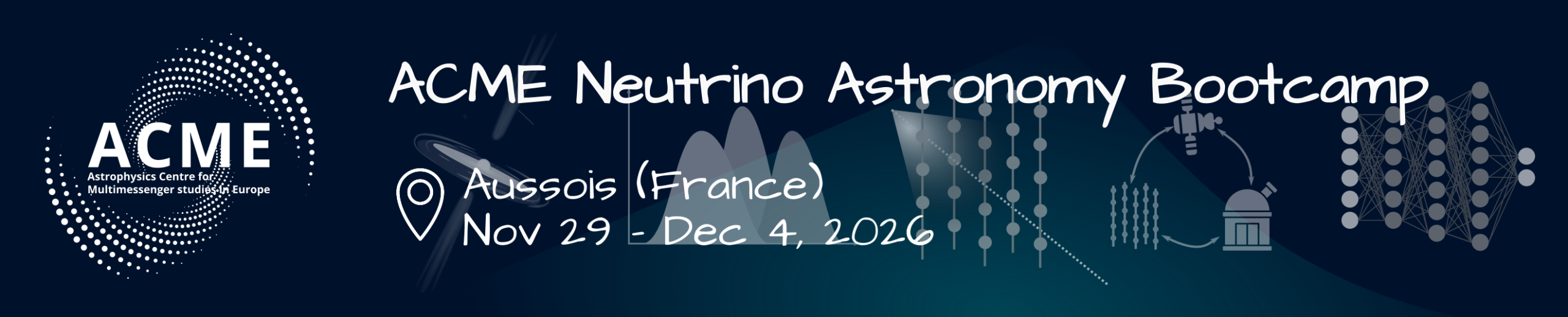
The ACME consortium is organizing a new school on neutrino astrophysics in Aussois (France) at the end of November 2026. It will cover astrophysical neutrino production and detection principles, and the steps towards a full analysis chain (simulation, event reconstruction, selection, statistical analysis), in the context of multi-messenger astrophysics. The schedule is divided into lectures and hands-on sessions. Additionally, each participant will be given the possibility to present their current research work in a short contribution during the conference. |
| |
ACME presence in international events
In addition to ACME-organized events, members of the consortium are participating in several conferences and workshops. In particular, ACME will take a leading role in the special session on European astronomical communities at the European Astronomical Society meeting (end of June in Lausanne). ACME will also be present at CRIS-MAC, TeVPA, and other events over the summer. |
| |
|
News on the infrastructures
|
| |
Release of the fifth gravitational wave catalog
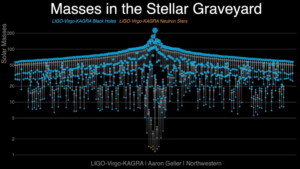
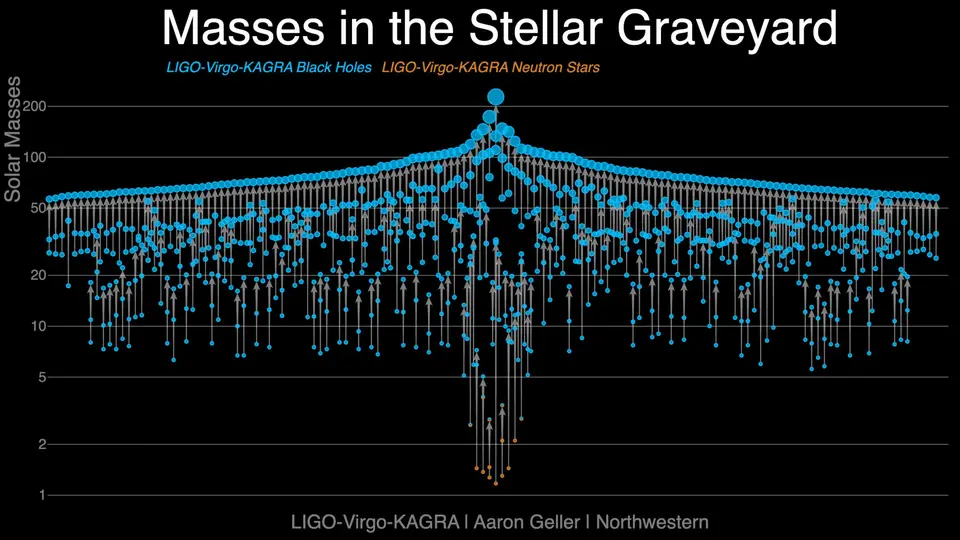
A visualization of all gravitational wave detections of merging black holes and neutron stars listed in the GWTC-5.0 catalog. © LIGO-Virgo-KAGRA / Aaron Geller / Northwestern
The fifth Gravitational-Wave Transient Catalog (GWTC-5), covering the second part of the fourth observing run (O4b; 10 April 2024 – 28 January 2025), is now publicly available. The corresponding Zenodo releases are available at: GWTC-5 Part 1 ; GWTC-5 Part 2.
In addition to Zenodo, the complete catalog products are also accessible through the GWOSC+ S3 service and via Galaxy, providing users with multiple access paths for data discovery and analysis. GWTC-5 can also be discovered seamlessly through the gwtc_analysis Python package (available on conda-forge), which provides direct programmatic access to catalog products and metadata. |
| |
CosmoHub Updates: New Multi-Messenger Data and Launch of the Canvas Section
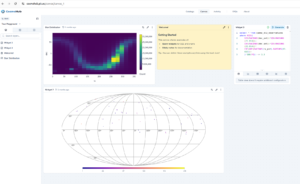
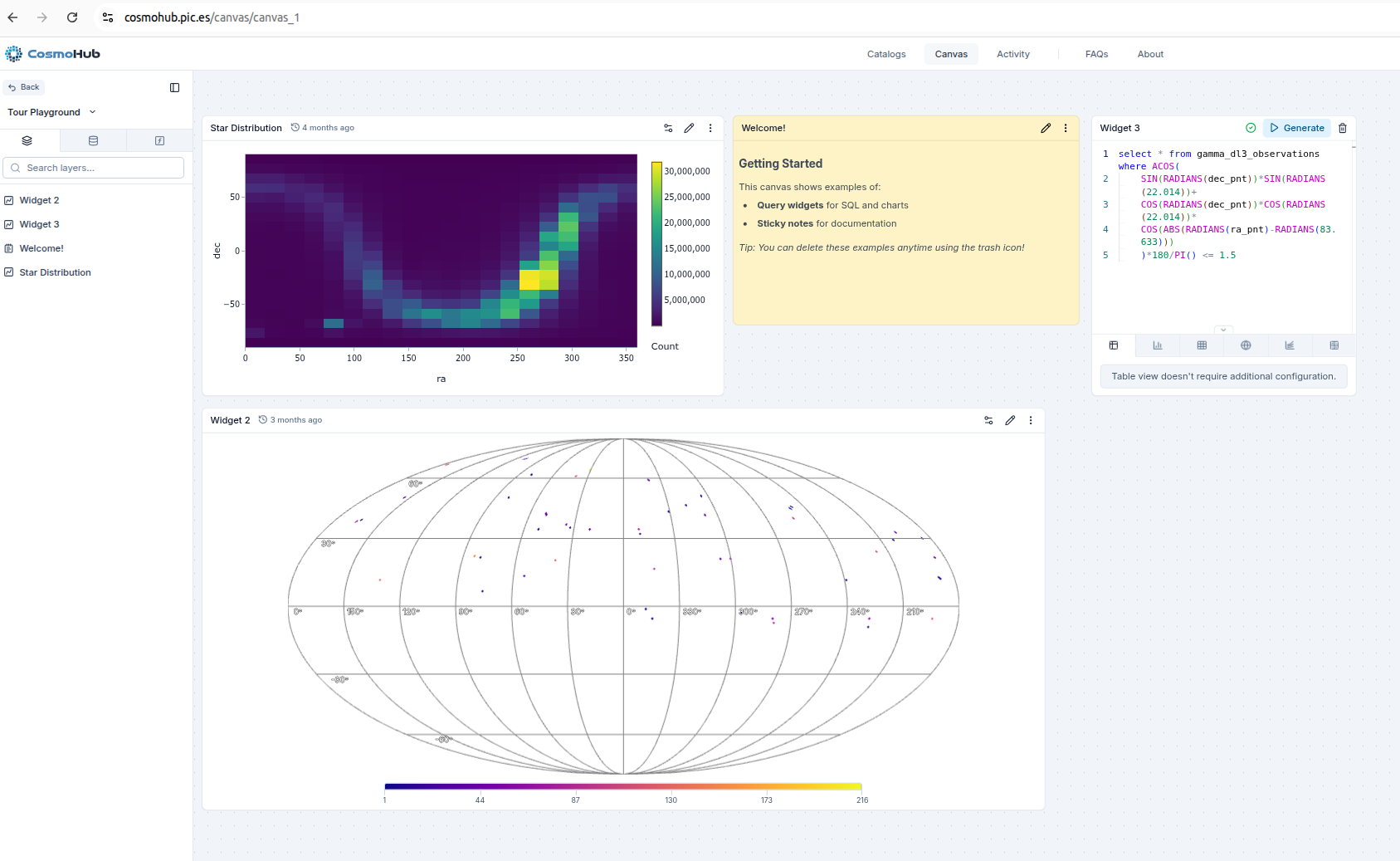
Canva dashboard with query widgets, heatmap, and HEALPix plots.
CosmoHub is a Hadoop-based portal for massive astronomical data exploration (Tallada et al.). Alongside Gaia and DES data, and serving Euclid, PAU, MAGIC, and LIGO, new datasets from LoFar DR3 (Gauss & Source), ANTARES, and IceCube were integrated, as well as MAGIC and CTAO test data. Supported by ACME, Canvas is a visual workspace for building and sharing reproducible JSON dashboards featuring custom queries and charts.
The community is invited to register and collaborate on multi-messenger use cases. Help drive new archival searches and spatial crossmatches! |
| |
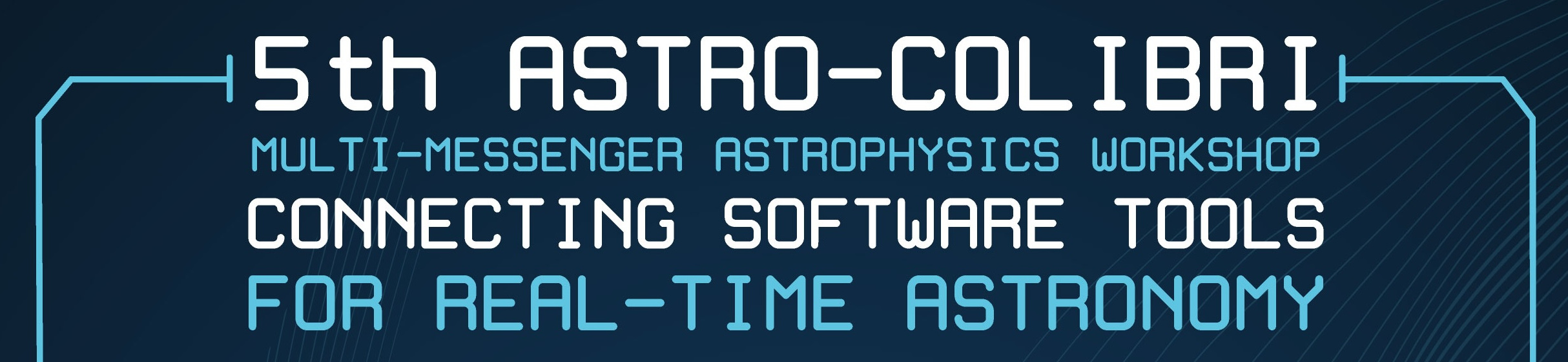
Astro-COLIBRI workshop in October 2026
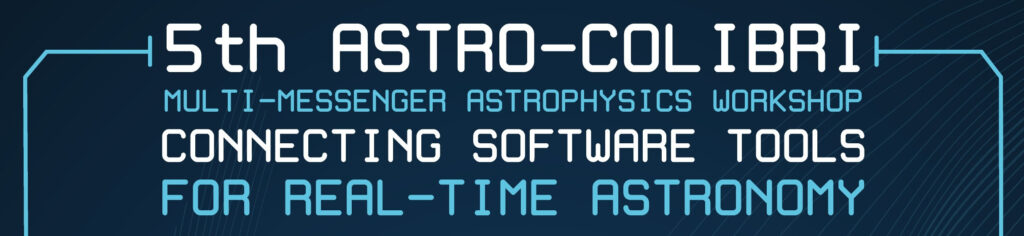
Building on the success of previous workshops, this international event aims to advance and share a research agenda focused on interconnecting software tools for real-time multi-messenger astronomy. It serves as a platform for leading scientists and early-career researchers to engage in discussions, fostering collaboration between developers and users with diverse expertise. |
| |
Summary of the 3rd CTAO school
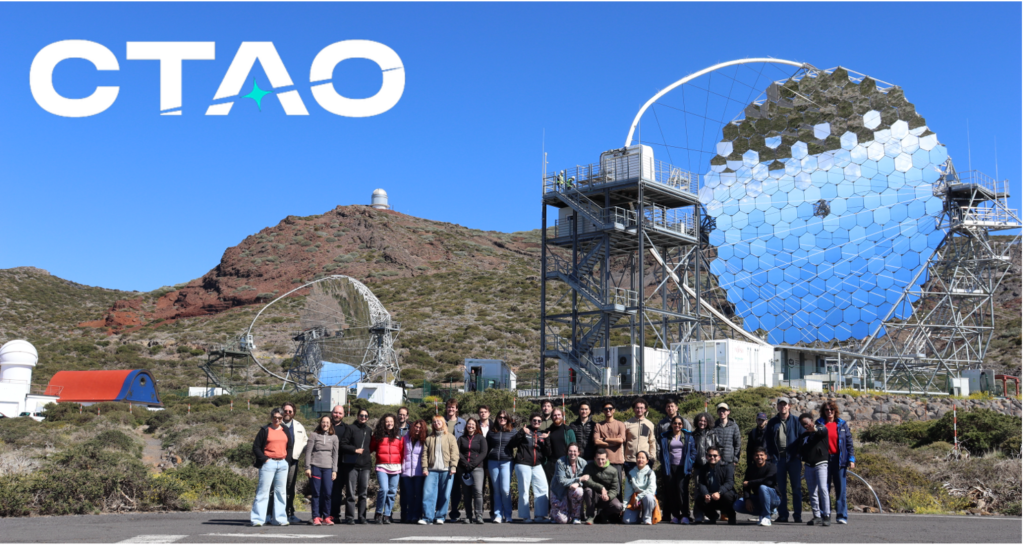 Photo from the 3rd CTAO School (May 2026). Photo from the 3rd CTAO School (May 2026).
The third edition of the CTAO School took place at CTAO-North in La Palma, Spain, bringing together 26 early-career researchers alongside experts to explore key aspects of gamma-ray astronomy and the Cherenkov Telescope Array Observatory (CTAO). The school combined lectures, hands-on sessions, and real-time observations with a telescope under commissioning for the CTAO, LST-1, and the MAGIC telescopes, introducing CTAO science, technology, and data analysis. Participants also presented their scientific projects, discussed them with peers, and engaged with the ACME helpdesk for guidance and support. The school continues to foster the next generation of researchers and collaboration in gamma-ray astronomy. |
| |
Funded by the European Union. Views and opinions expressed are however those of the author(s) only and do not necessarily reflect those of the European Union or of the European Research Executive Agency (REA). Neither the European Union nor the granting authority can be held responsible for them. The ACME project has received funding from the European Union’s Horizon Europe Research and innovation programme under Grant Agreement No 101131928.
| |
|